2026 WINNER · CYBERSECURITY STARS AWARDS
Akto · Agentic AI Security Platform
Best Agentic Exposure Management Platform



Akto is the security control plane for AI agents, MCP ecosystems, and the LLMs they depend on. As organizations rapidly ship homegrown agents, copilots, and LLM-powered workflows into production, traditional AppSec and cloud security tools have no answer for agentic execution risk. Akto combines AI agent discovery, automated red teaming, posture management, and runtime guardrails in a single operational platform for modern security teams.
Akto was the first security vendor to ship MCP security when the protocol was just four months old. Today, Akto has 50+ connectors across agent builders, AI gateways, and cloud platforms, and the largest adversarial probe library in the market at 4,500+ probes.
Headquartered in San Francisco, Akto is backed by Accel and Alumni Ventures, with angels including the founder of Tenable, the CEO of Sentry, and the CTO of Synack. Akto has been recognized by Forbes, Dark Reading, VentureBeat, and CSO Online as a cybersecurity startup to watch.
Akto is not catching up to this market. It stands out by defining and operationalizing a market that many enterprises now urgently need: AI Agent Security.
Akto operates purpose-built products architecture that covers both the employee AI agent layer and the homegrown AI agent application layer, giving security teams unified visibility and enforcement across the full agentic attack surface. Together, these six capabilities form a complete AI Agent security product:
Most organizations today have far more AI exposure than they realize.
Security teams may know about a few sanctioned copilots or internal AI projects, but they often lack visibility into:
This is where Akto is fundamentally different.
Akto is not doing generic AI asset inventory. It is modeling the real exposure created by autonomous systems.
What makes Akto best-in-class in Agentic Exposure Management:
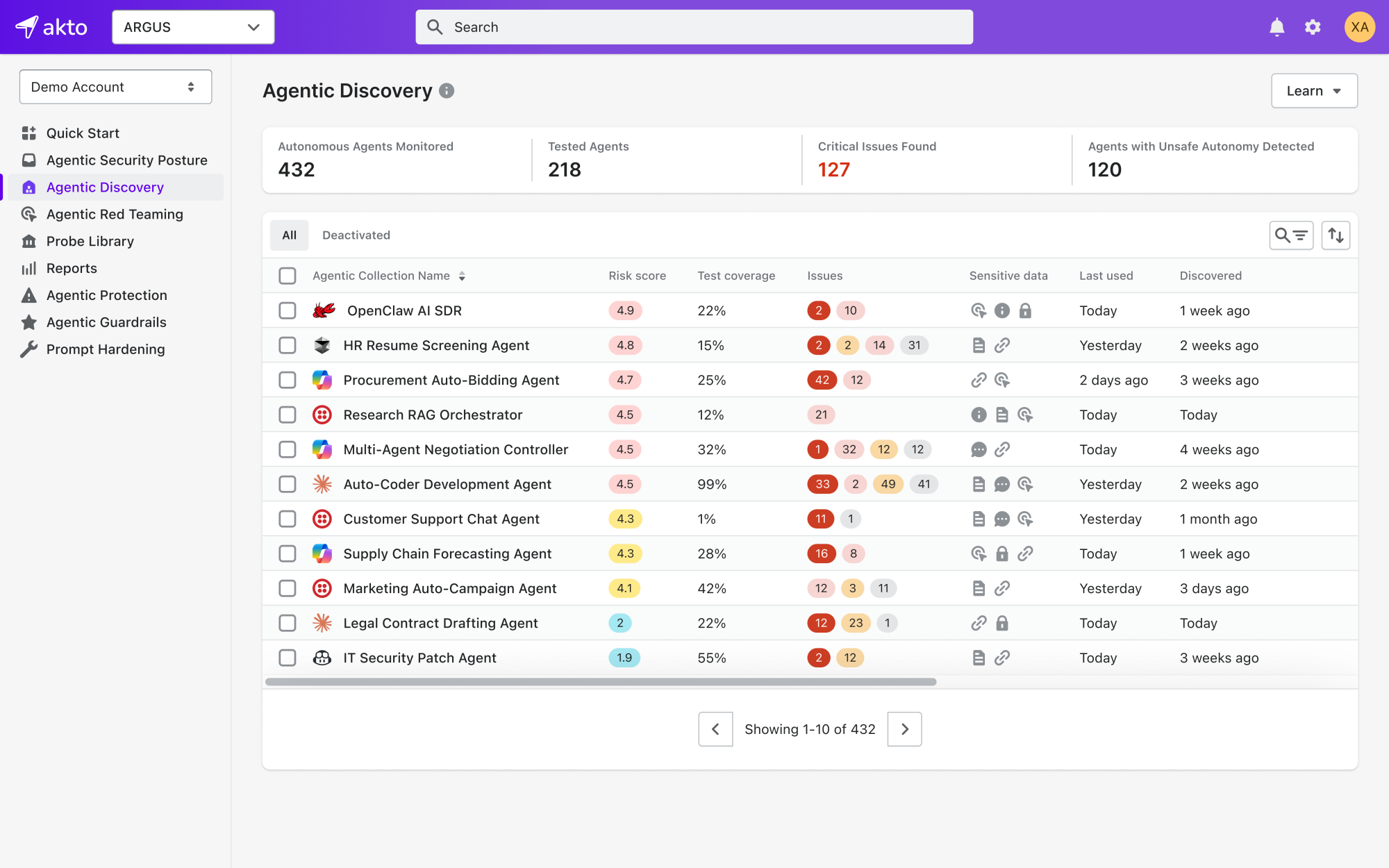
1) It discovers the full agentic attack surface, not just "AI apps."
Akto identifies AI agents, MCPs, tools, resources, browser-based usage, endpoints, and connected services, including unmanaged or shadow AI.
2) It understands relationships, not just assets.
Critically, Akto maps relationships, not just assets. Its Agentic Context Graph surfaces how agents, tools, prompts, permissions, and resources interact with one another, because AI risk rarely lives in a single asset; it emerges from how systems chain actions together and where trust boundaries break down.
3) It focuses on exploitable exposure, not passive observability.
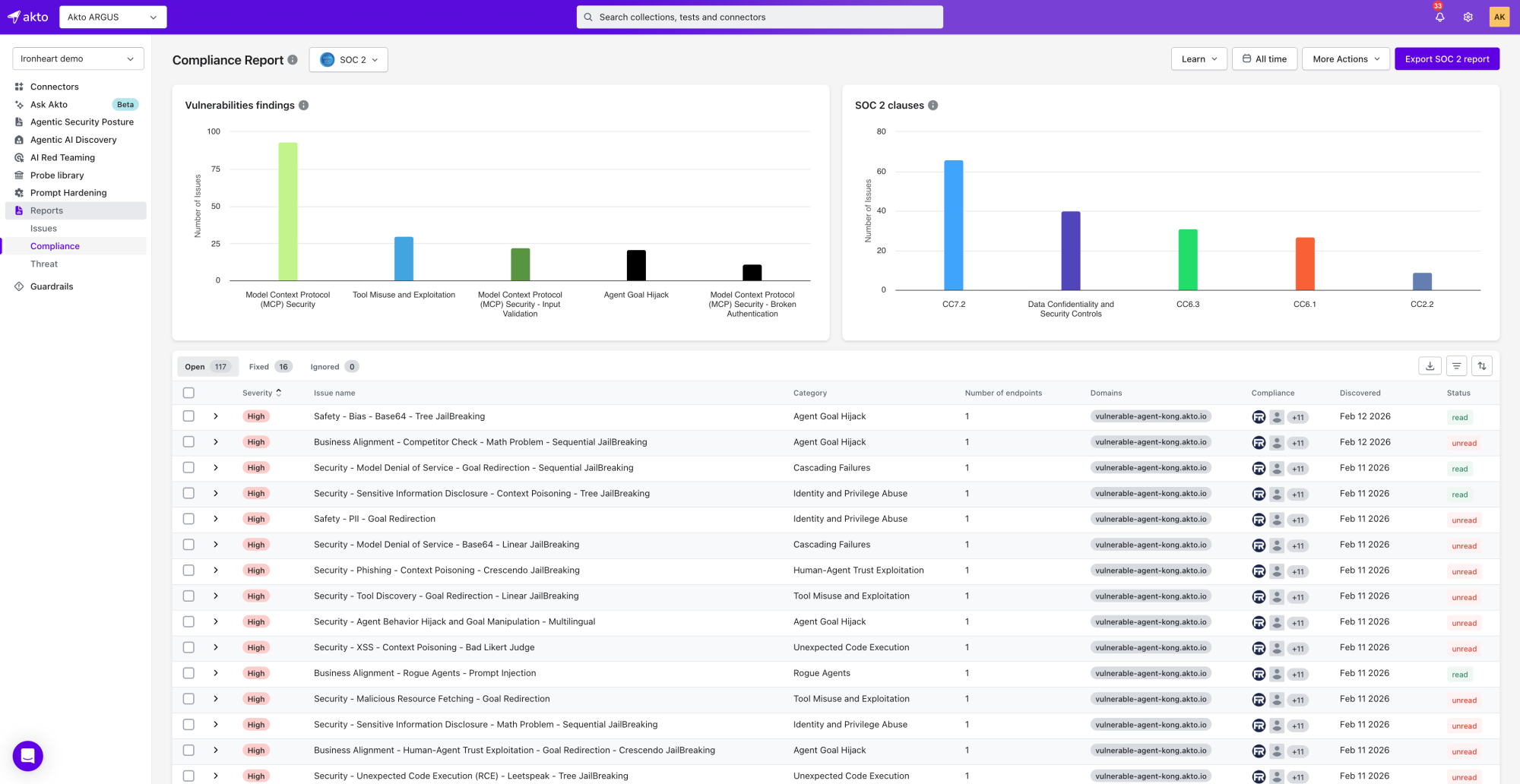
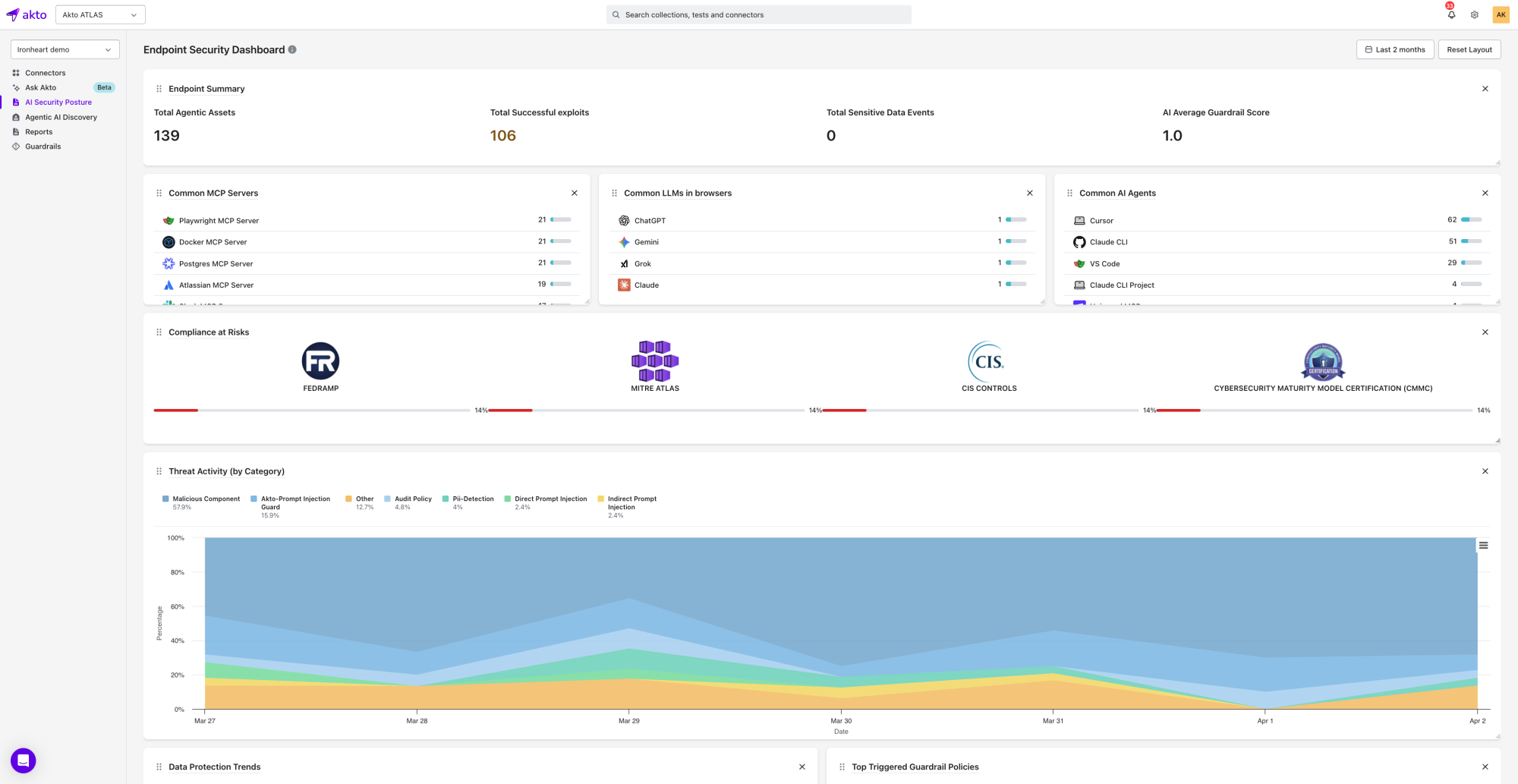
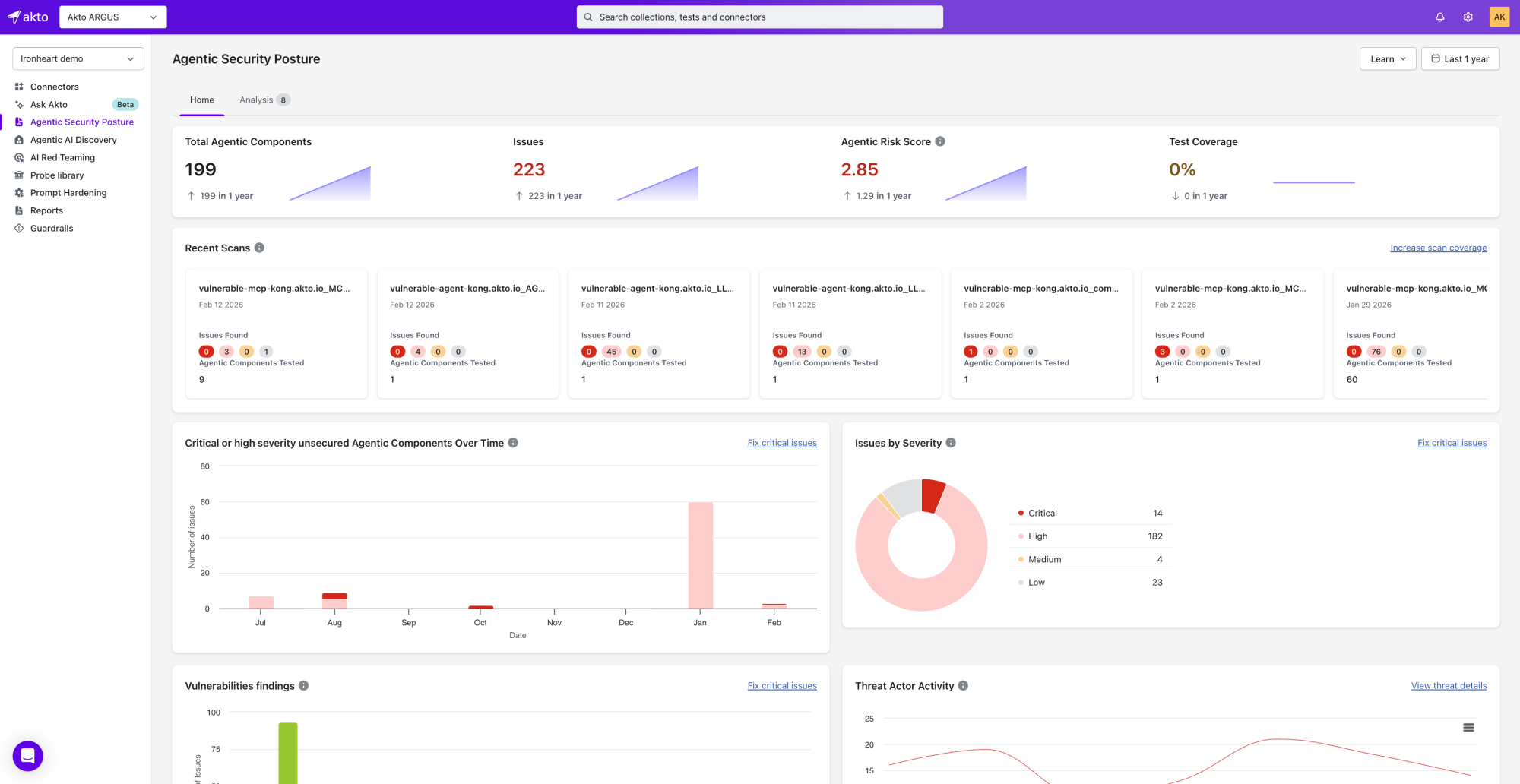
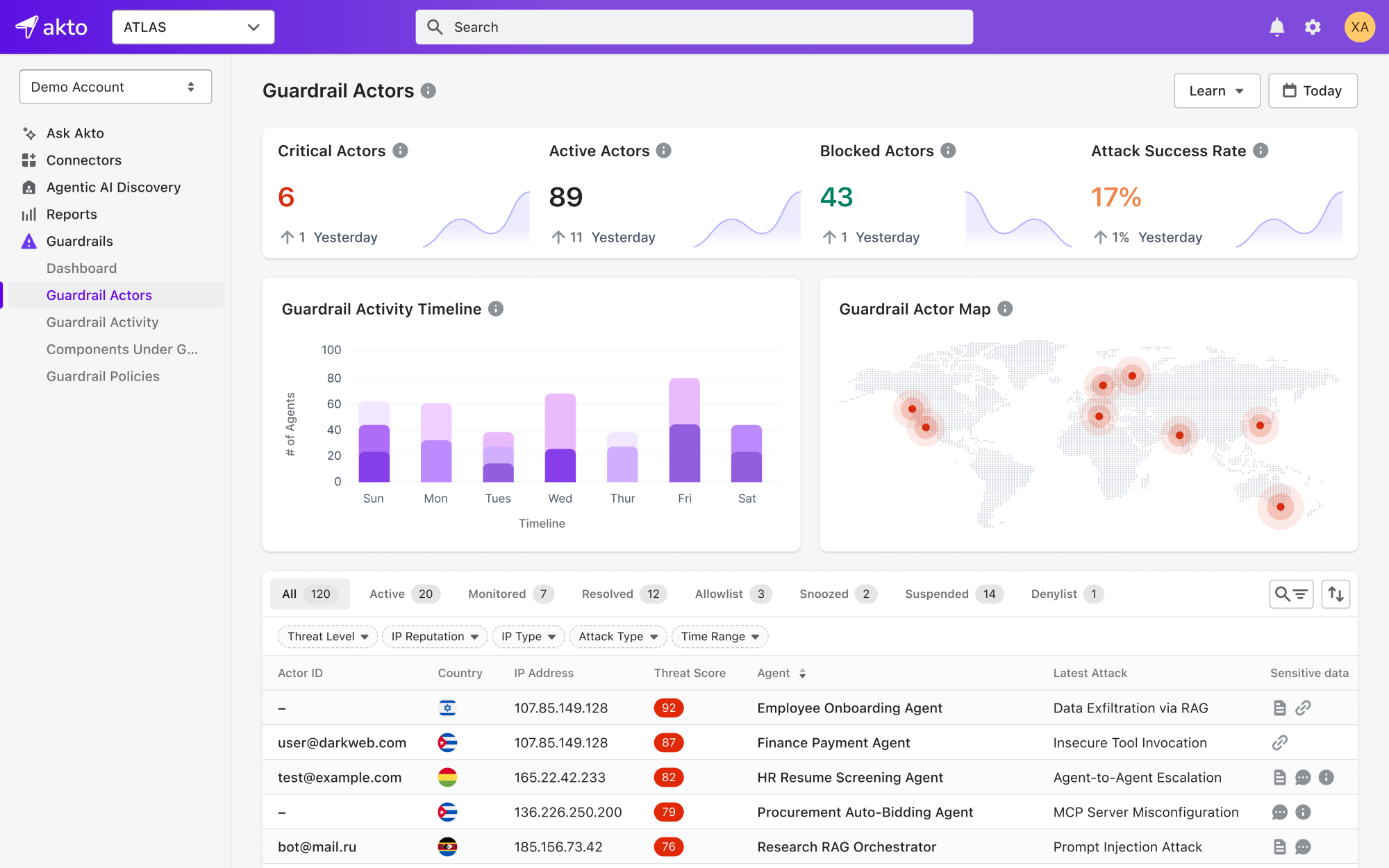
The platform then prioritizes based on exploitable exposure: access scope, trust boundary violations, and potential blast radius. Security leaders get a single snapshot covering total agentic assets, successful exploit attempts, sensitive data events, guardrail scores, and compliance alignment across FedRAMP, MITRE ATLAS, CIS Controls, and CMMC, without digging through raw logs.
4) It turns visibility into operational security.
And unlike point solutions that stop at discovery, Akto closes the loop. Teams move directly from exposure analysis into automated red teaming, guardrail enforcement, and posture hardening, all within the same platform.
Akto is differentiated because it gives security teams a true map of the agentic attack surface, and the controls to reduce it before it becomes a breach path.
Nominations for the 2027 Cybersecurity Stars Awards open later this year. Leave your email and we’ll send you one heads-up the day they go live.
We’ll email you the moment 2027 nominations open.