2026 WINNER · CYBERSECURITY STARS AWARDS
Elisity · Identity-Based Microsegmentation Platform
Best Micro-Segmentation Platform



Elisity is an identity-based microsegmentation company that helps enterprises stop lateral movement, prevent ransomware spread, and meet compliance and cyber insurance requirements across IT, OT, and IoT environments. The Elisity platform discovers every device on an organization's network, enforces least-privilege access policies through existing network infrastructure, and delivers full microsegmentation in weeks - without agents, additional hardware, or network re-architecture.
Elisity is trusted by Fortune 500 healthcare systems, global manufacturers, and pharmaceutical companies including GSK, Main Line Health, Shaw Industries, and St. Luke's University Health Network. Founded in 2019, Elisity is headquartered in San Jose, California.
The Elisity Microsegmentation Platform delivers on a single brand promise: identity-based microsegmentation, activated in weeks, on the network infrastructure organizations already own.
Microsegmentation is one of the most-recommended controls in cybersecurity because it stops ransomware and intruders from moving from one infected device to the rest of the network. Yet an Omdia survey of 352 enterprises found that 99% of organizations are planning microsegmentation but only 9% have it working across the majority of their critical systems. Nearly half suffered a lateral-movement attack in the last 12 months. Elisity is purpose-built to close that gap.
The platform is organized around three capability themes.
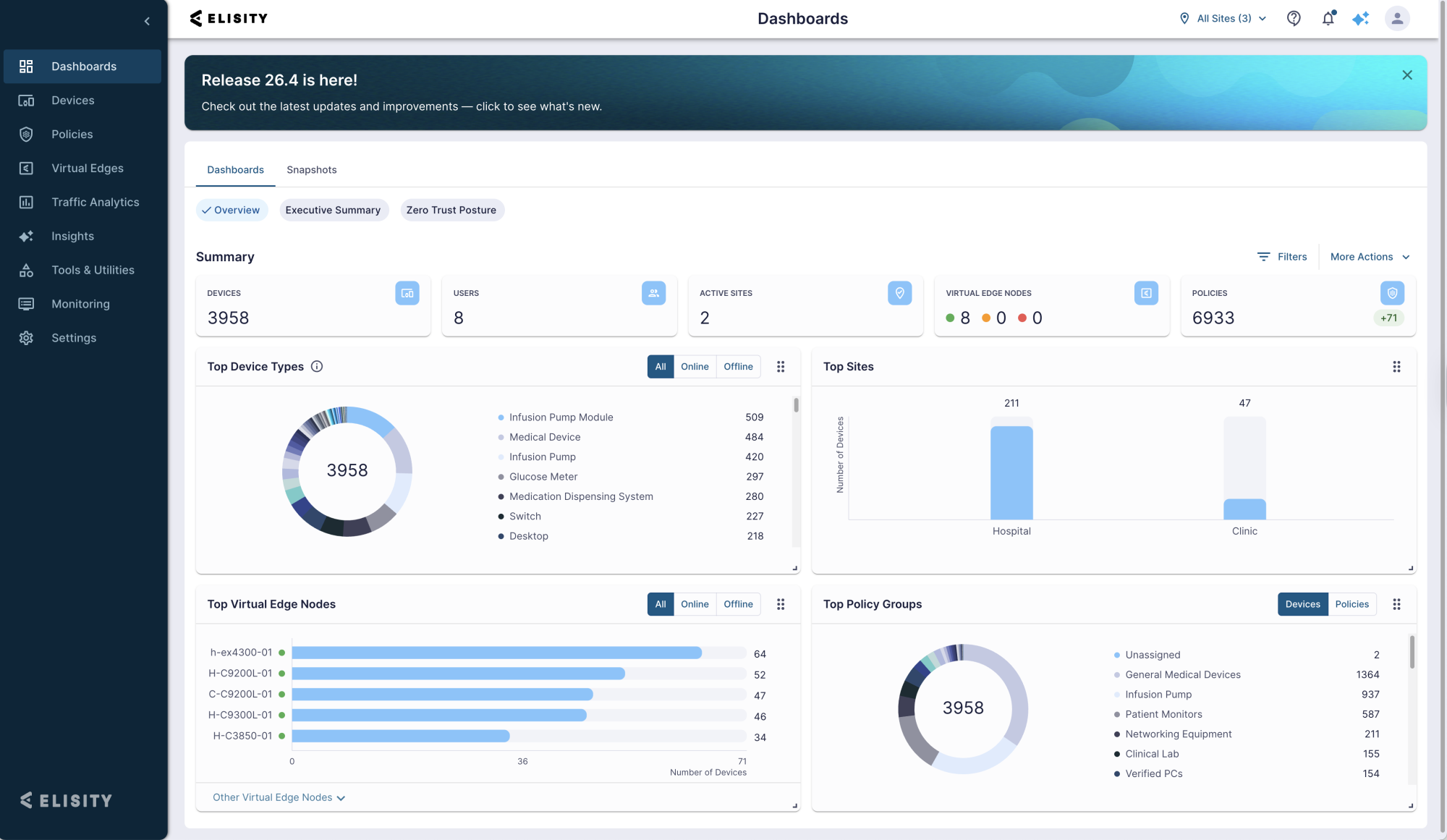
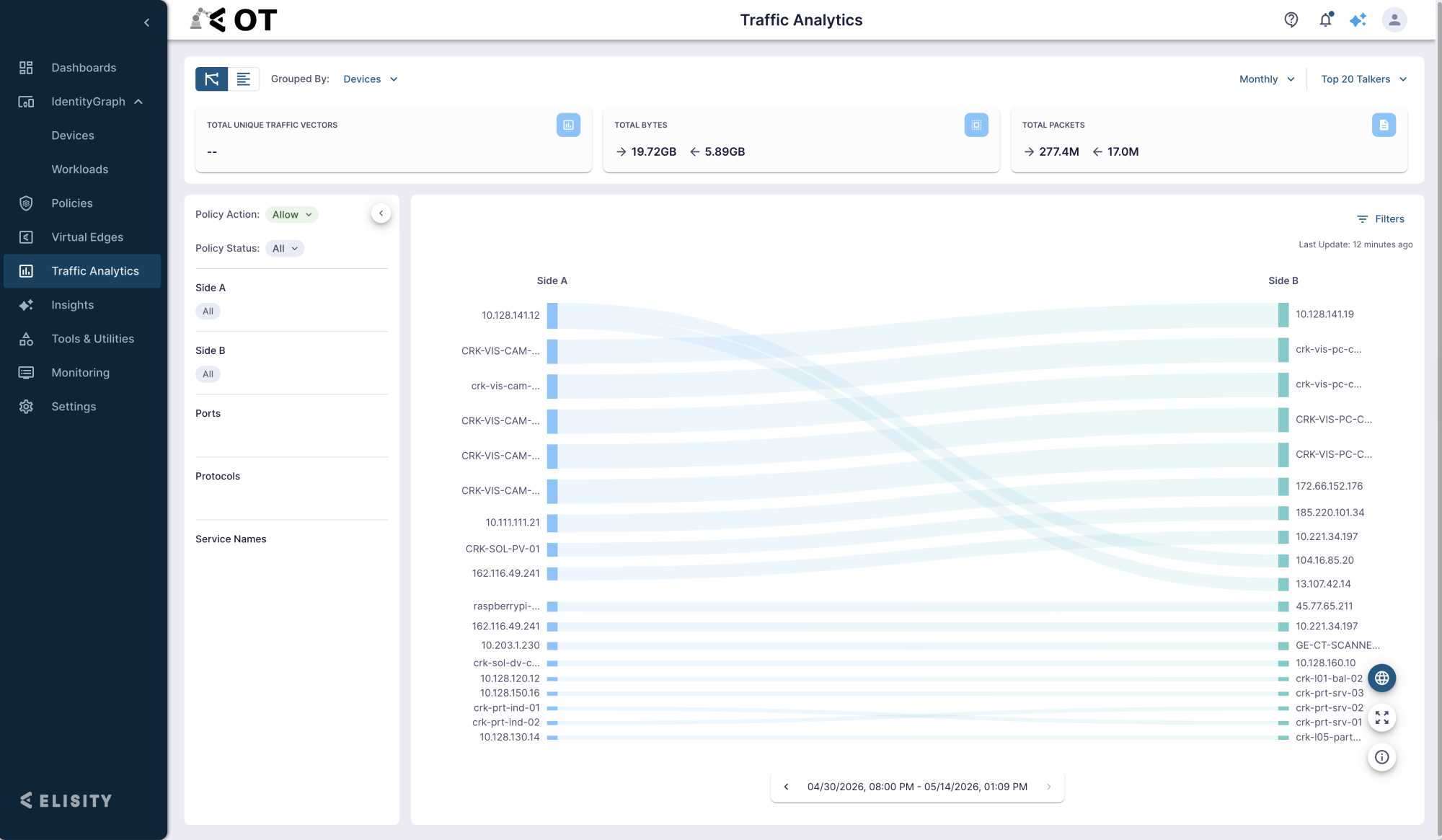
You cannot protect what you cannot see. Most organizations have 30 to 50 percent more devices on their network than their inventory shows. The unknowns include MRI machines, infusion pumps, factory robots, smart cameras, badge readers, and building controls. Attackers love these devices because they cannot run security software and they often sit on the same flat network as patient records or production systems.
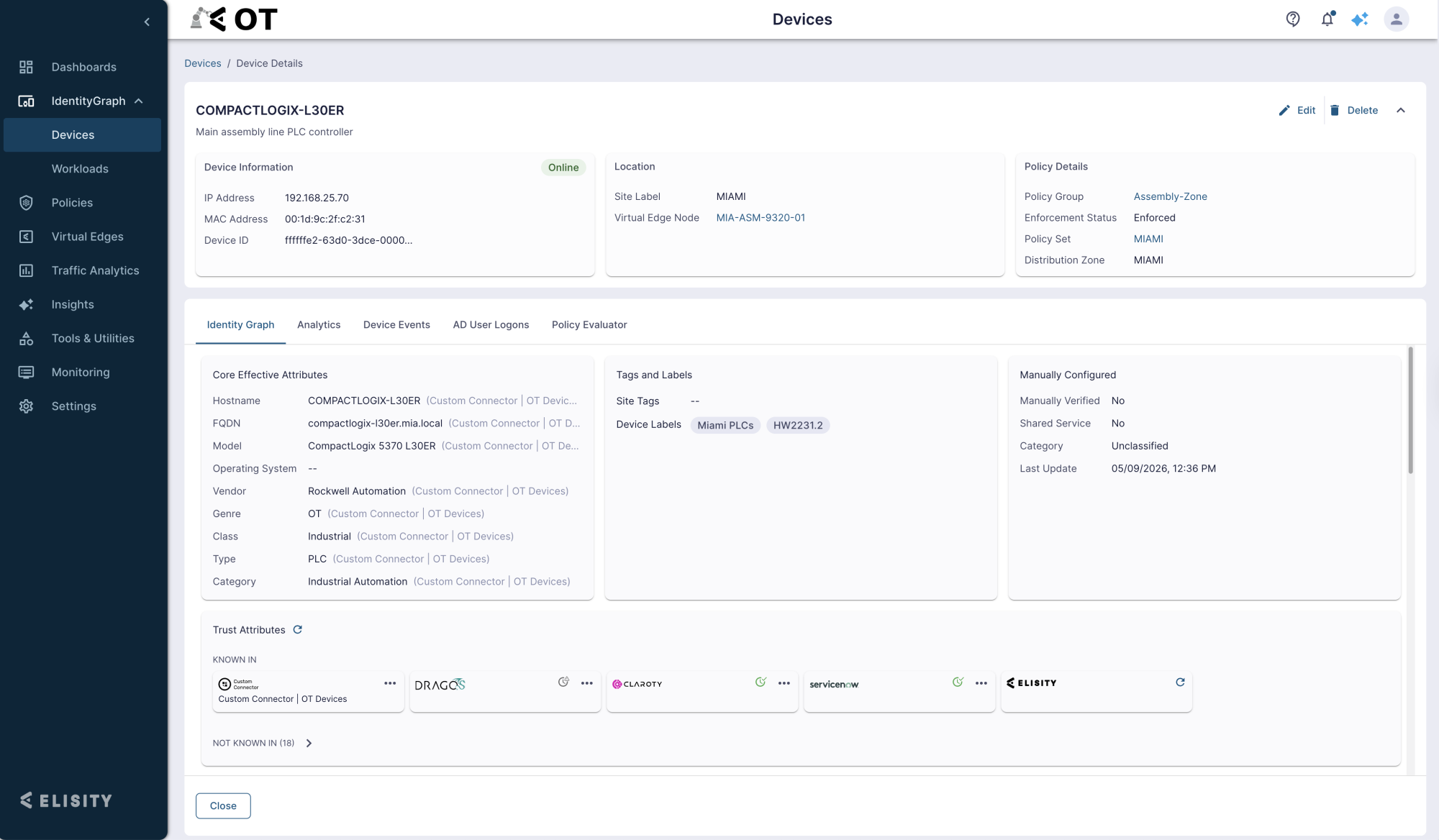
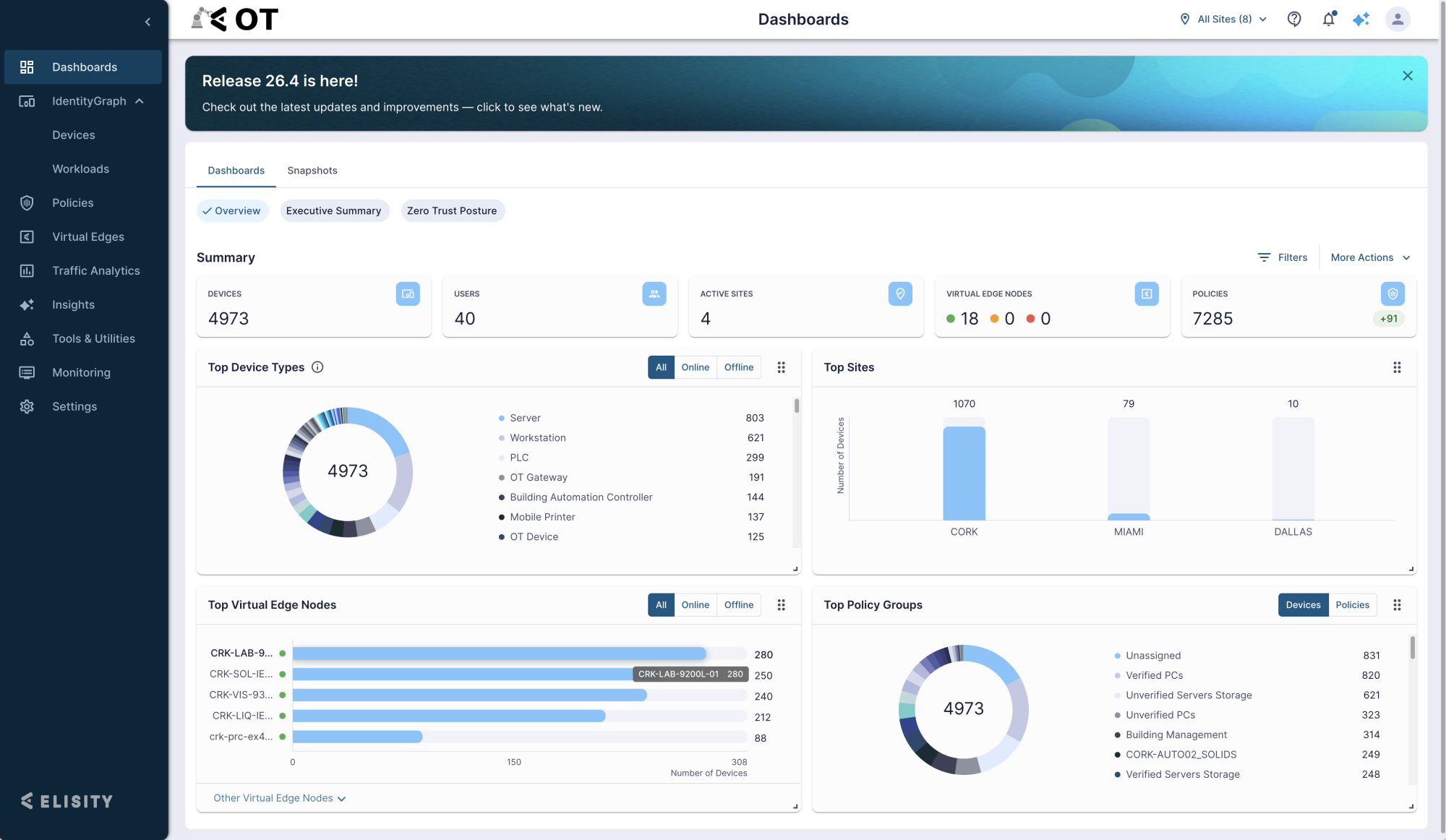
The Elisity IdentityGraph™ pulls identity, behavior, traffic, and risk signals from 25+ tools an organization already owns and builds one real-time record per device. Every user, workload, and device is classified with business meaning (what it does, who owns it, what it costs the business if it goes down) and a single risk score.
Zero Trust is the principle that no user or device should be trusted by default, even if it is inside the corporate network. It only works if a policy is actually enforced on every user and every device, not just the ones with security agents. That is where most Zero Trust programs stall.
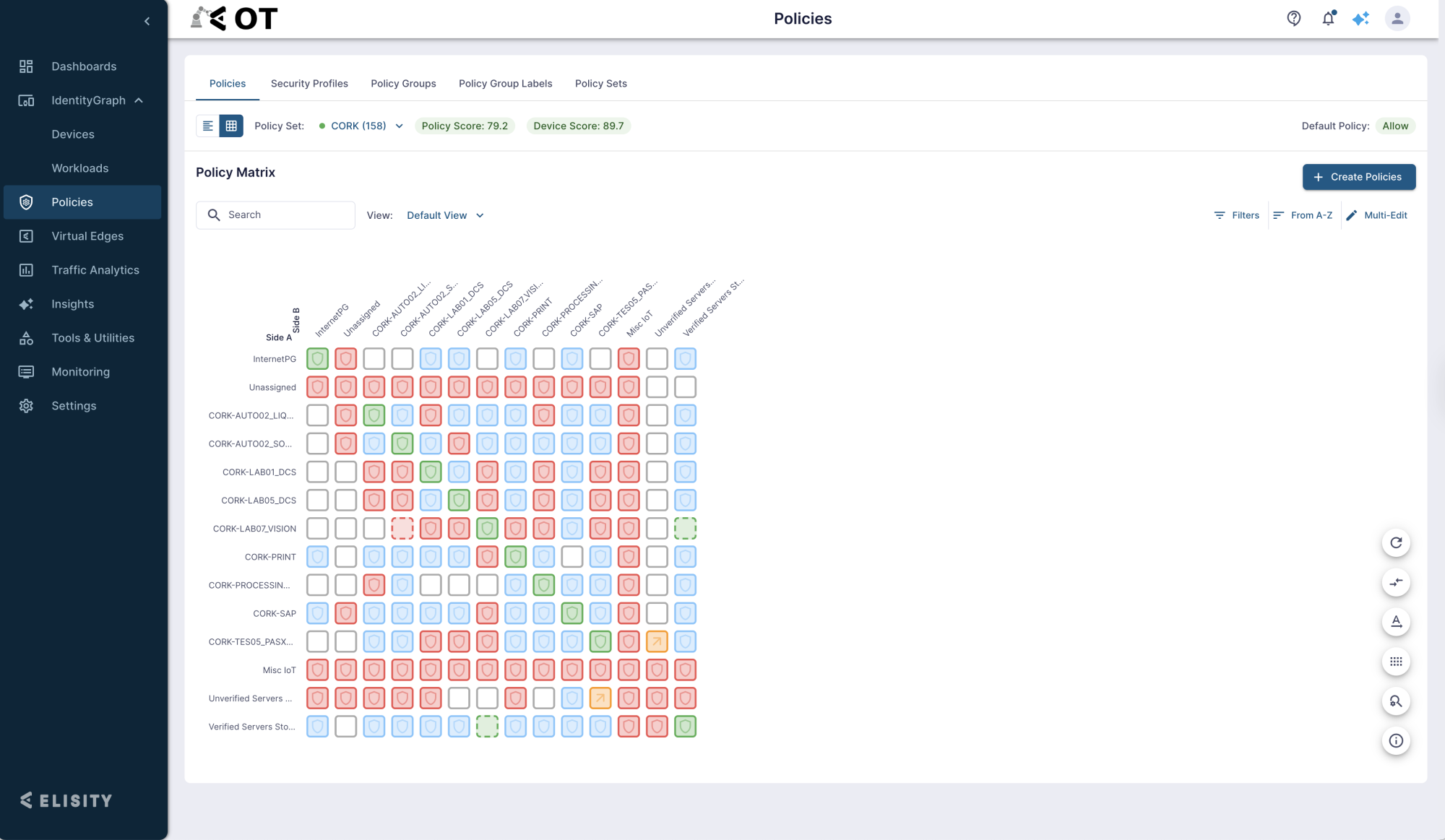
The Elisity Microsegmentation Platform enforces identity-based, least-privilege access policies across business IT, smart-building IoT, industrial OT, and connected medical devices on one unified policy graph. The same Elisity IdentityGraph™ that discovers a device is the one that enforces policy on it. There is no translation layer between visibility and control, which is where competing tools fail.
The reason microsegmentation has eluded most organizations is not lack of interest. It is that traditional approaches demand rip-and-replace hardware, multi-year projects, and specialized teams that customers cannot hire. Gartner reports 60% of legacy microsegmentation projects stall.
The Elisity Microsegmentation Platform deploys on the Cisco, Juniper, Arista, HPE Aruba, and Hirschmann network infrastructure organizations already own and scales with the team they already have.
Microsegmentation has been a recommended security control for more than a decade. Most organizations that have tried it have either failed outright or spent years and millions of dollars to protect a fraction of their network. The industry knows the destination - limit what each device can talk to so a single compromise cannot spread - but every previous architecture has tripped on the same obstacles: software agents that cannot be installed on medical, industrial, or IoT devices; multi-year hardware refreshes; policies that break the moment devices move; and operating models that require specialist teams customers cannot hire.
The Elisity Microsegmentation Platform was built to remove those obstacles. Five things make it distinct.
Every modern organization already owns a network. Elisity turns the existing network - the equipment from vendors like Cisco, Juniper, Arista, HPE Aruba, and Hirschmann - into the place where security policy is enforced. Nothing is ripped out. No new appliances sit in the traffic path slowing it down. No software is installed on the devices being protected.
The result: a security program that has historically meant capital budgets, board approvals, and multi-year projects becomes one that delivers in weeks on infrastructure already on the balance sheet.
Competing tools were built for one device category. Some protect servers and laptops. Some protect industrial controllers. Some protect medical devices. Elisity is built to protect all of them on one policy model. Inside a hospital, the electronic health record system, an MRI machine, a building HVAC controller, a nurse's badge reader, and a corporate laptop all live under the same rules. Inside a factory, business applications, robotic arms, programmable controllers, and shop-floor sensors share one policy graph.
The result: organizations stop running three or four parallel segmentation programs and consolidate to a single platform. The 30 to 50 percent of devices that traditional tools cannot reach - because security software cannot be installed on them - are now protected.
Traditional segmentation tools rely on IP addresses and network locations to decide what is allowed. The moment a device moves, gets re-assigned an address, or shows up in a new building, the policy breaks and someone has to rebuild it. Elisity bases policy on who or what a device is - its identity, role, owner, business function, and risk score - not where it is on the network. When a device moves, the policy moves with it automatically.
The result: policies stay correct without constant rework, and the platform contains an attack in real time instead of being one step behind.
Security teams have historically been afraid of microsegmentation for one reason: a wrong rule can cut off the system that runs surgery scheduling, payroll, or a production line. Elisity shows operators exactly which connections a new policy will block before any traffic is actually stopped. The team sees the impact, adjusts, and only then activates. If anything is wrong after enforcement, one click rolls it back.
The result: the single largest reason microsegmentation projects have stalled across the industry - institutional fear of breaking production - is removed.
Competing approaches require standing up a dedicated microsegmentation team, often 6 to 14 full-time specialists, working for one to three years before the first policy is enforced. Elisity customers measure the first enforced policy in days and full deployment in weeks. MultiCare Health System ran its entire rollout across 14 active hospital sites with two full-time employees. St. Luke's University Health Network completed deployment across 33 sites in two months, two weeks ahead of schedule. GSK reached 187 active sites in EMEA in under four months.
The result: a security control that has historically been out of reach for all but the largest enterprises with the largest budgets is now achievable for any organization with an existing network and an existing team.
Nominations for the 2027 Cybersecurity Stars Awards open later this year. Leave your email and we’ll send you one heads-up the day they go live.
We’ll email you the moment 2027 nominations open.