2026 WINNER · CYBERSECURITY STARS AWARDS
HoundDog.ai · Privacy Code Scanner
Best GDPR Compliance Platform



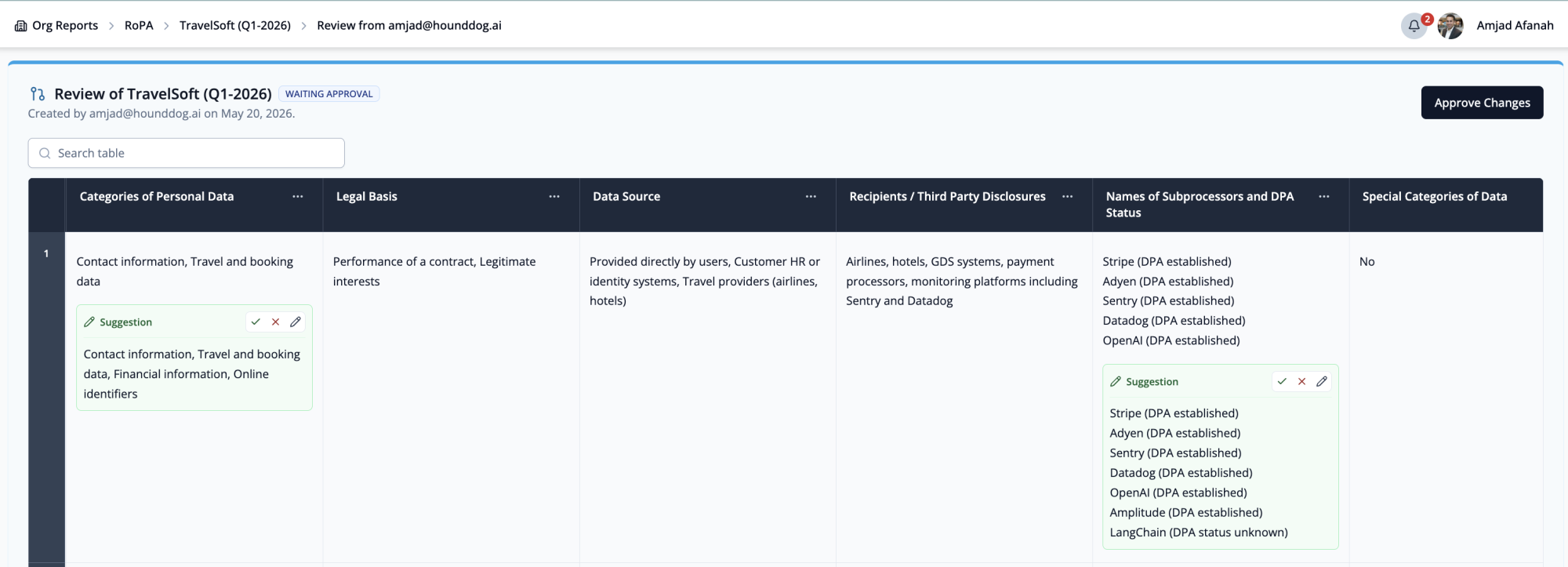
HoundDog.ai is a data privacy platform that uses code-level intelligence for proactive risk detection, AI governance, and GDPR data flow mapping. Its lightweight code scanner embeds privacy into development, preventing log leaks and uncovering hidden third-party and AI subprocessors that privacy reports often miss. With its shift-left approach, privacy programs can prevent risks instead of reacting to them after the fact. New data flows detected by the scanner are surfaced as suggested RoPA edits, and privacy reviews signed off in design can be verified with code-level evidence before code ships to production. For processing activities beyond the codebase, the Org RoPA adds a modern review workflow where teams collaborate on suggested edits before publishing. HoundDog is used by Fortune 1000 companies in tech, healthcare, and finance, and is embedded in Replit's AI-powered app generation workflow, running 10,000 daily scans protecting 45M users.
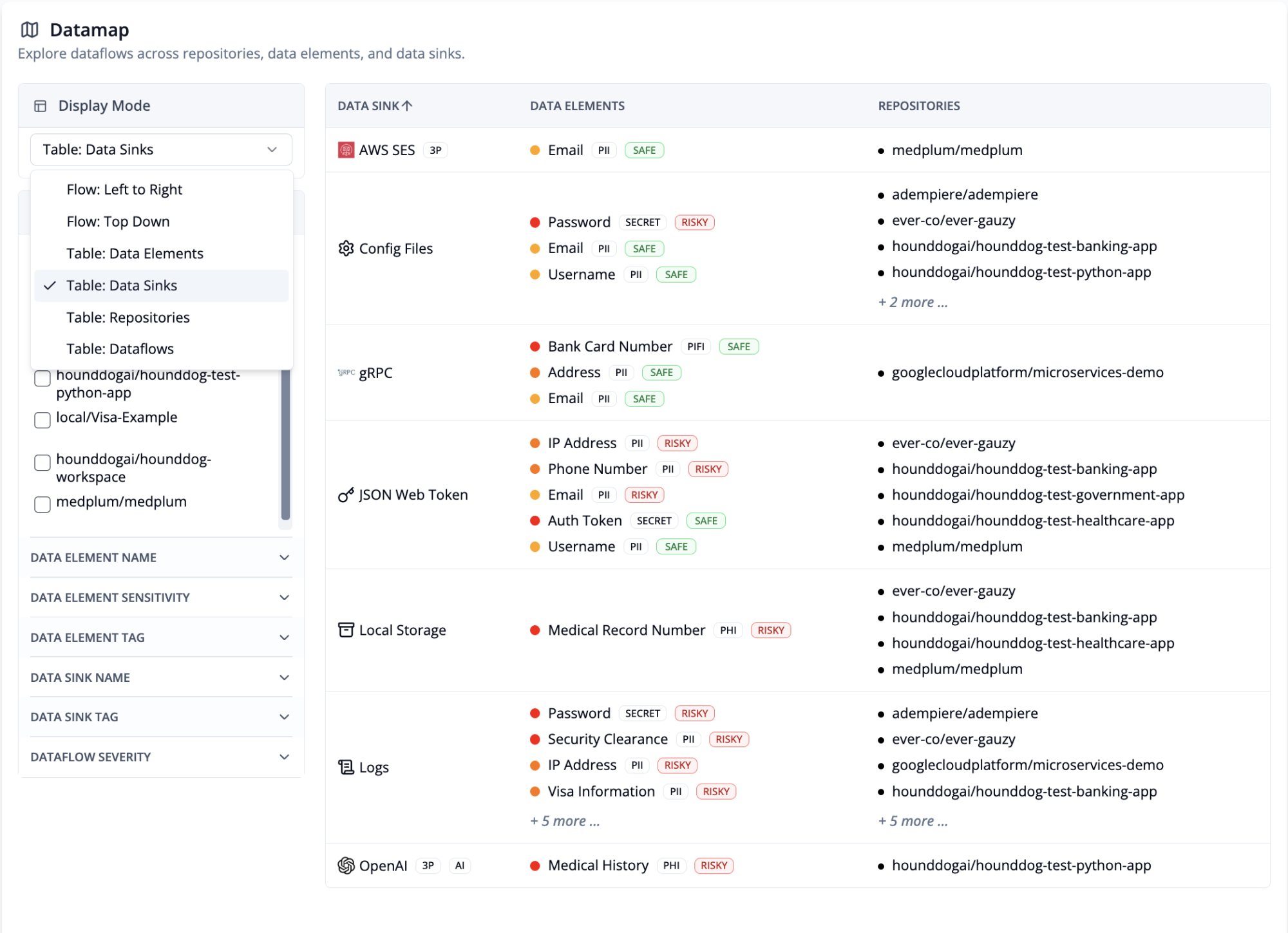
Maps sensitive data flows from custom applications to data sinks where personal data may be exposed, including logs, storage, APIs, third-party services, and AI integrations. Surfaces these flows and subprocessors as suggested ROPA updates, supporting Article 30 record-keeping obligations.
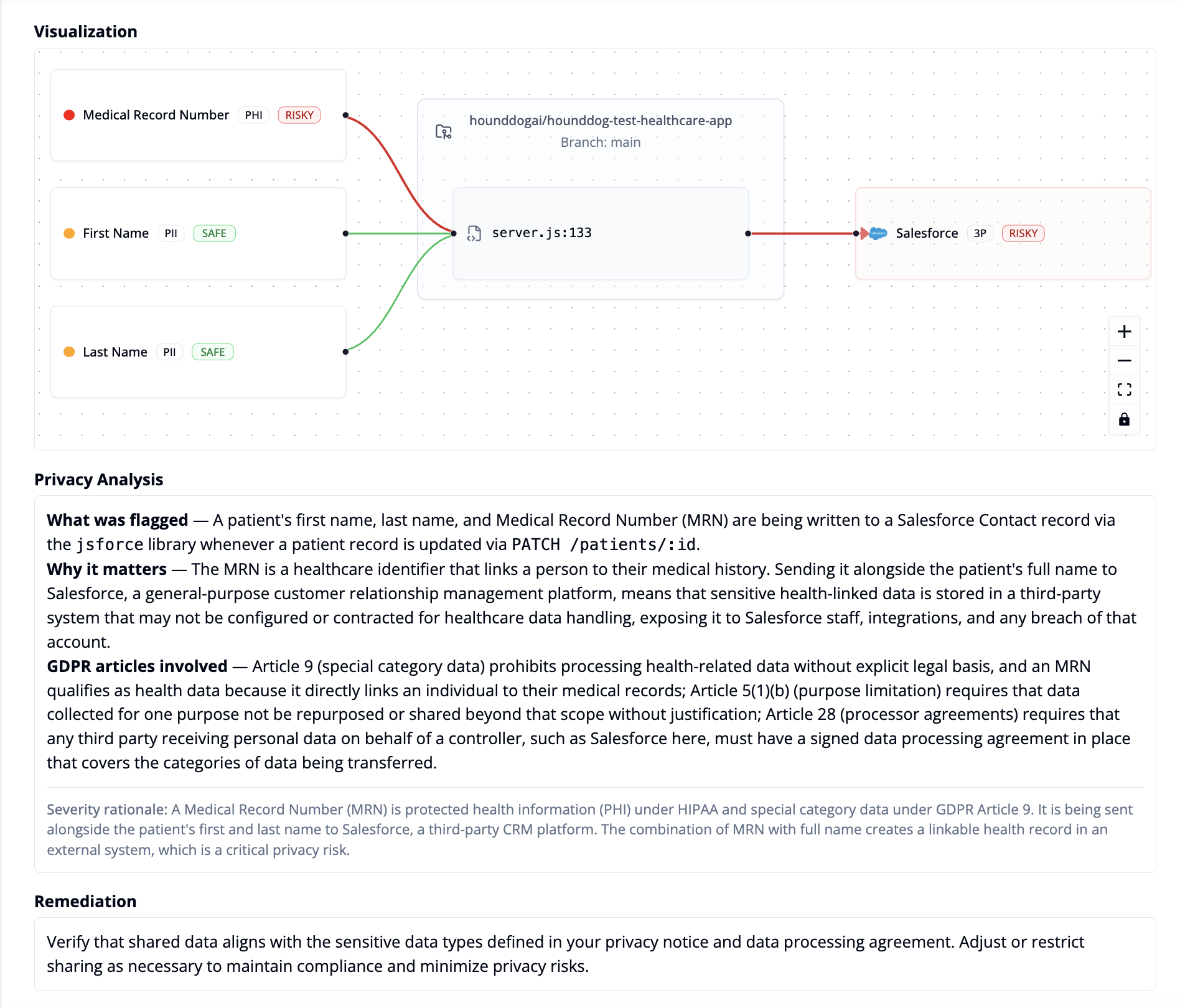
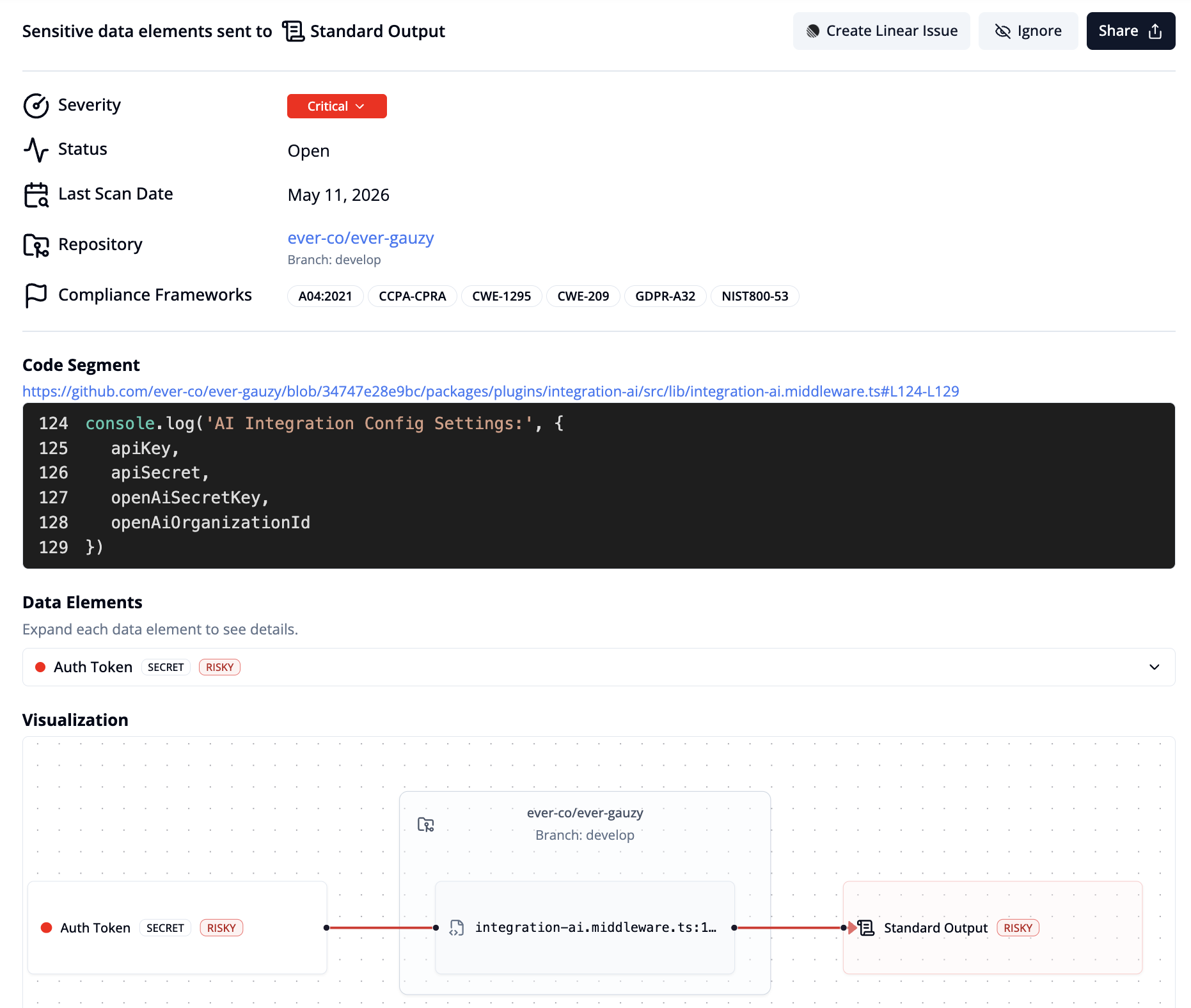
Interprocedural taint analysis tracks how PII, PHI, and CHD move through transformations and function calls, exposing risks buried deep in code. A developer prints a full user object, a tainted variable carries PII through a chain of transformations, and by the time anyone notices, the data has already been logged or sent to a third party. As engineering teams and codebases grow, these risks amplify.
Detects PII leaks across more than 100 sensitive data types, spanning personal data, PHI, and financial data, before they reach logs, unsafe storage, third-party services, or AI integrations. Catches over-collection and over-logging at the source, enforcing data minimization under Article 5(1)(c).
Detects AI SDKs and orchestration frameworks such as LangChain and hundreds of others, uncovers shadow AI usage, and traces how personal data is shared with these systems. Validates alignment with Data Processing Agreements, including cases where embedded SDKs have no DPA, supporting Article 28 processor obligations alongside AI governance and EU AI Act compliance.
Surfaces new third-party integrations across more than 600 supported third-party and AI integrations and flags changes that conflict with existing DPAs or trigger the need for new ones, giving privacy teams continuous processing activity monitoring grounded in code, before any data starts flowing.
Provides code-level evidence to validate DPIA decisions made during design, ensuring implementation matches the assessment before code reaches production and supporting Article 35 obligations for high-risk processing.
Integrates directly into IDEs (Cursor, VS Code, IntelliJ), pull requests, and CI pipelines, enforcing data protection by design and by default under Article 25 to surface PII leaks before code is merged.
Integrates with GitHub, GitLab, and Bitbucket to automate CI configuration across thousands of repositories. What typically takes weeks rolls out in minutes, applied in bulk with customizable scan frequency, pull request comments, and self-hosted runner support.
Manages ROPA across the organization, including processing activities outside the scope of the custom apps scanned (e.g. sales, marketing, analytics, and support), with structured workflows for collaboration, review, and reporting in line with Article 30.
Built in Rust with rule-based analysis for fast, consistent results across large codebases with minimal CI impact, which would not be the case with LLM-based analysis that is too expensive and slow for CI. Combines deterministic detection with AI-driven reasoning for deeper, context-aware analysis, without ever accessing production data.
ROPA and DPIA are often outdated because they rely on surveys that miss third-party and AI integrations embedded in code. HoundDog.ai is a privacy code scanner that continuously surfaces new data flows and subprocessors as suggested updates, ensuring Records of Processing Activities reflect how personal data is actually collected, processed, and shared under Article 30, while validating DPIA assumptions against real code-level evidence under Article 35.
Most GDPR compliance software identifies issues only after personal data has already been collected, logged, or shared. HoundDog.ai detects PII leaks before they reach logs, unsafe storage, third-party services, or AI integrations, enforcing data minimization at the source under Article 5(1)(c).
Modern applications embed AI deeply in code, often without visibility or DPAs in place. HoundDog.ai detects these integrations, discovers shadow AI usage, and traces how PII is shared, supporting Article 28 processor obligations alongside AI governance and EU AI Act compliance.
Legacy tools rely on production system access and remain blind to integrations embedded in code. HoundDog.ai analyzes data flows directly from source code, with coverage across 600+ third-party and AI integrations and 100+ sensitive data types.
Privacy impact assessments are often disconnected from implementation. HoundDog.ai validates data protection by design and by default decisions under Article 25 with real code-level evidence, before any personal data is processed in production.
There is no need to scan live systems or expose sensitive data, making this approach both more secure and more effective at identifying PII leaks early in the development lifecycle.
Deployed within Replit, supporting over 45 million developers and running more than 10,000 scans per day. Replit has confirmed that grounding LLM analysis with HoundDog.ai's static code scanning results delivers over 90% better outcomes than LLM analysis alone.
As applications grow and rely on APIs, third-party services, and AI integrations, maintaining accurate ROPA and DPIA documentation under Articles 30 and 35 is not possible without visibility into how personal data is actually processed in code.
Nominations for the 2027 Cybersecurity Stars Awards open later this year. Leave your email and we’ll send you one heads-up the day they go live.
We’ll email you the moment 2027 nominations open.