2026 WINNER · CYBERSECURITY STARS AWARDS

Impart Security · AI Runtime Defense Platform

Best AI Runtime Defense Platform

2026 Winner medal
Impart Security logo
Company
Impart Security
Location
United States
Website
Team Size
10 - 49 employees
01

Overview

Impart Security is the AI Runtime Defense platform. Impart provides complete runtime protection against AI attacks — stopping threats in line across every attack surface: LLMs, MCP servers, AI agents, APIs, and web applications.

Unlike tools that sit outside production and generate alerts after an attack has landed, Impart runs inline within the runtime itself — the only position from which security teams can evaluate, block, and shape outcomes with the accuracy and precision that the AI era demands.

Impart's unified enforcement engine inspects every request going to AI agents, MCP servers, APIs, and web apps. Each request is evaluated in context — using prior behavioral history and live signals — to determine intent before it reaches the backend.

The platform is built on three architectural principles: a shared session store across all surfaces, a single behavioral data model, and one unified enforcement decision point. What one agent learns, every agent can know — instantly — enabling Impart to see a distributed attack as a single coordinated pattern rather than unrelated noise across dashboards.

02

Key Capabilities

One enforcement engine. Five surfaces. Every decision made inline, before the request reaches the backend.

Unified inline enforcement across five surfaces:

  • LLM Protection. Sequence-aware enforcement at the model boundary. Classifies attacker intent across full session history to stop prompt injection and data exfiltration before inference, not after.
  • MCP Protection. A live catalog of every MCP server and tool in use, with inline policy enforcement on caller identity, scope, and arguments evaluated before invocation.
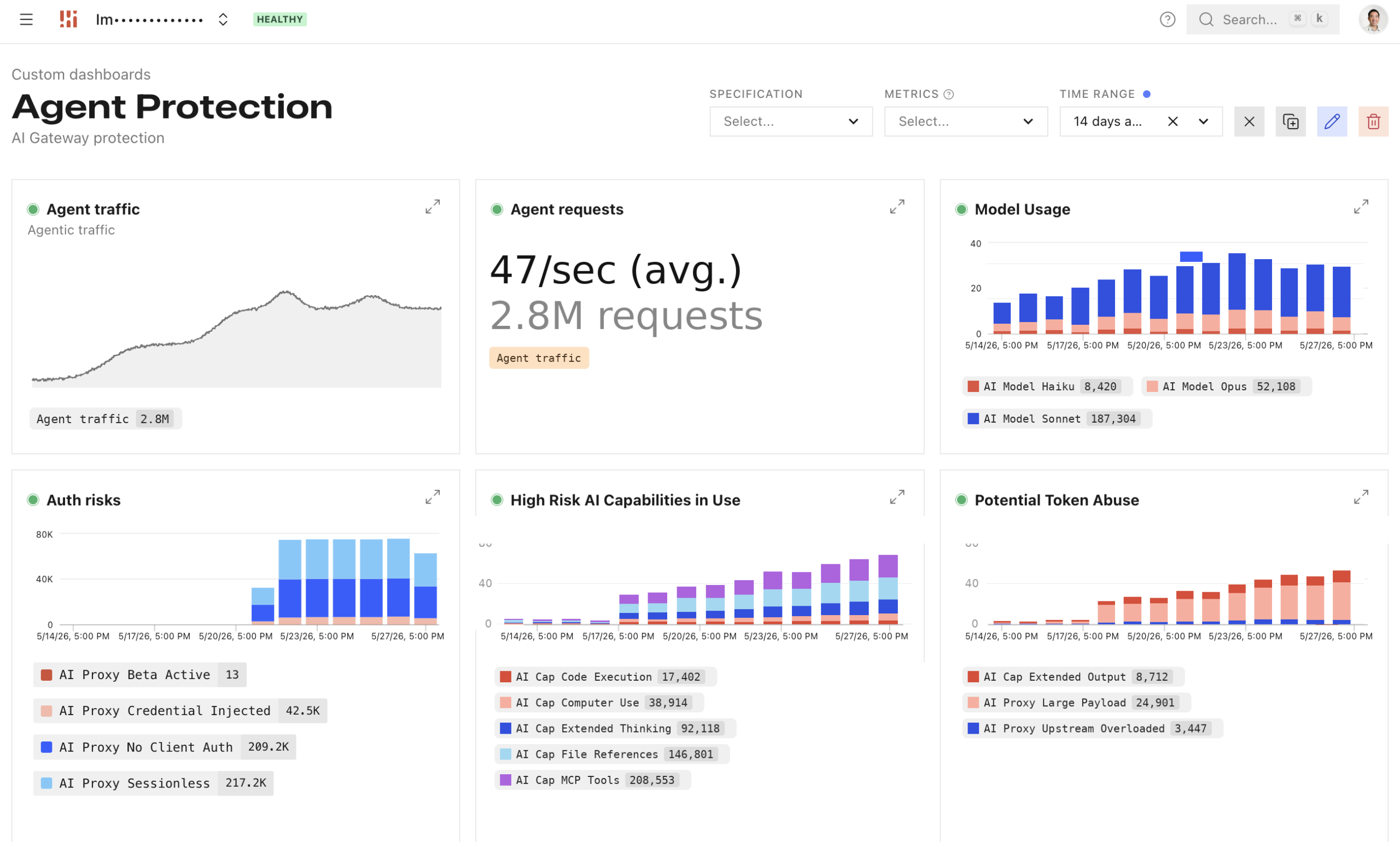
  • Agent Protection. Stateful evaluation of agent behavior across tool chains. Blocks privilege escalation, unauthorized tool use, and chained exploits as they execute.
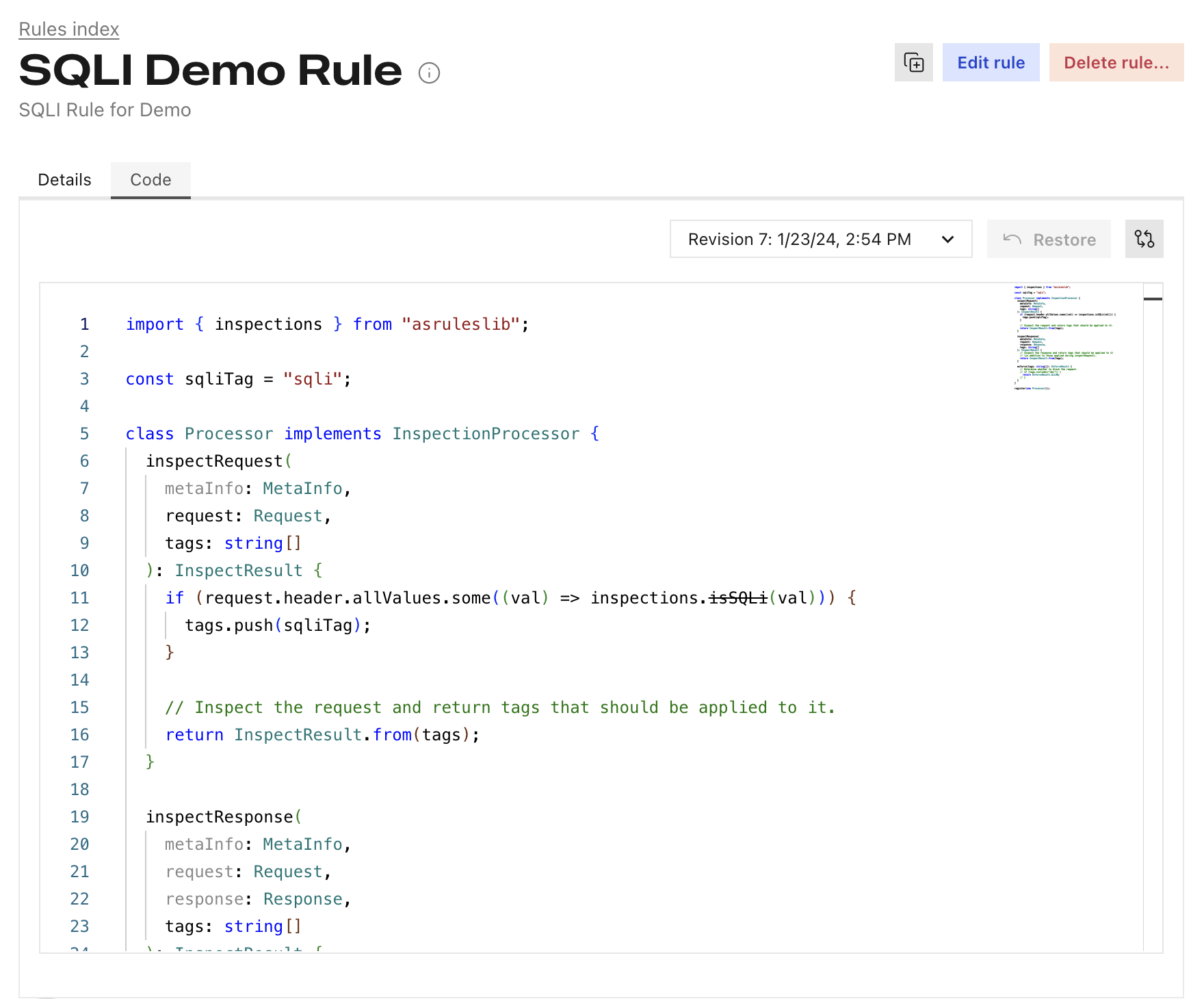
  • WAF and API Security. Inline, code-based rules on every HTTP request and API call. Covers injection, IDOR, auth bypass, bot activity, API abuse, and PII leaks.
  • Runtime Defense Agents. AI-powered patching, detection, reporting, and red-team agents running on the same enforcement engine.

The enforcement engine underneath:

  • Code-based rules (WebAssembly). Every rule, built-in or custom, compiles to WASM and runs on every request at machine speed. Auditable. Reviewable. Not opaque model output.
  • Shared behavioral state. What one surface learns, every surface knows instantly. Rotating IPs and multi-service probes show up as one coordinated pattern, not noise across dashboards.
  • High-speed behavioral memory. Every IP, key, device, and user builds a timeline. Rules query 30 days of history in under a millisecond, so recon, probing, and extraction read as one attack rather than three unrelated events.
  • Virtual patches in minutes. Design, test, and deploy a patch for a zero-day in minutes, not days to weeks.

Proof in production:

  • 95% of customers actively block in production.
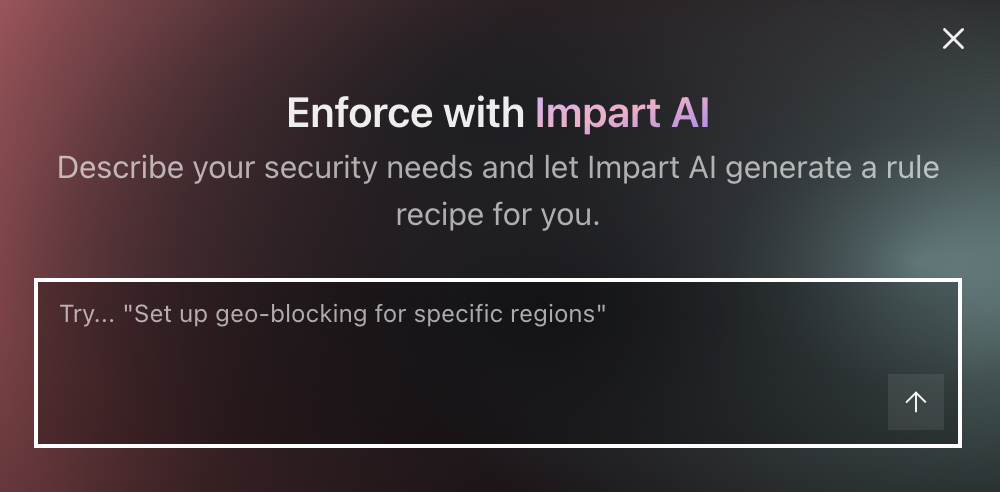
  • 90% use Impart AI to manage firewall rules.
  • 1,500,000+ API requests per second at proven scale.
  • 100% of requests inspected inline.
  • 30 days of behavioral context per entity.
03

How we are different

Most AI security tools observe. They scan inputs, scan outputs, and generate alerts after an attack has already landed. They sit outside production and tell you what happened. Impart runs inline, inside the runtime, and stops the attack while it is still in flight. That is the difference between knowing and stopping. If it's not inline, it's not enforcement.

That position is the differentiator everything else follows from:

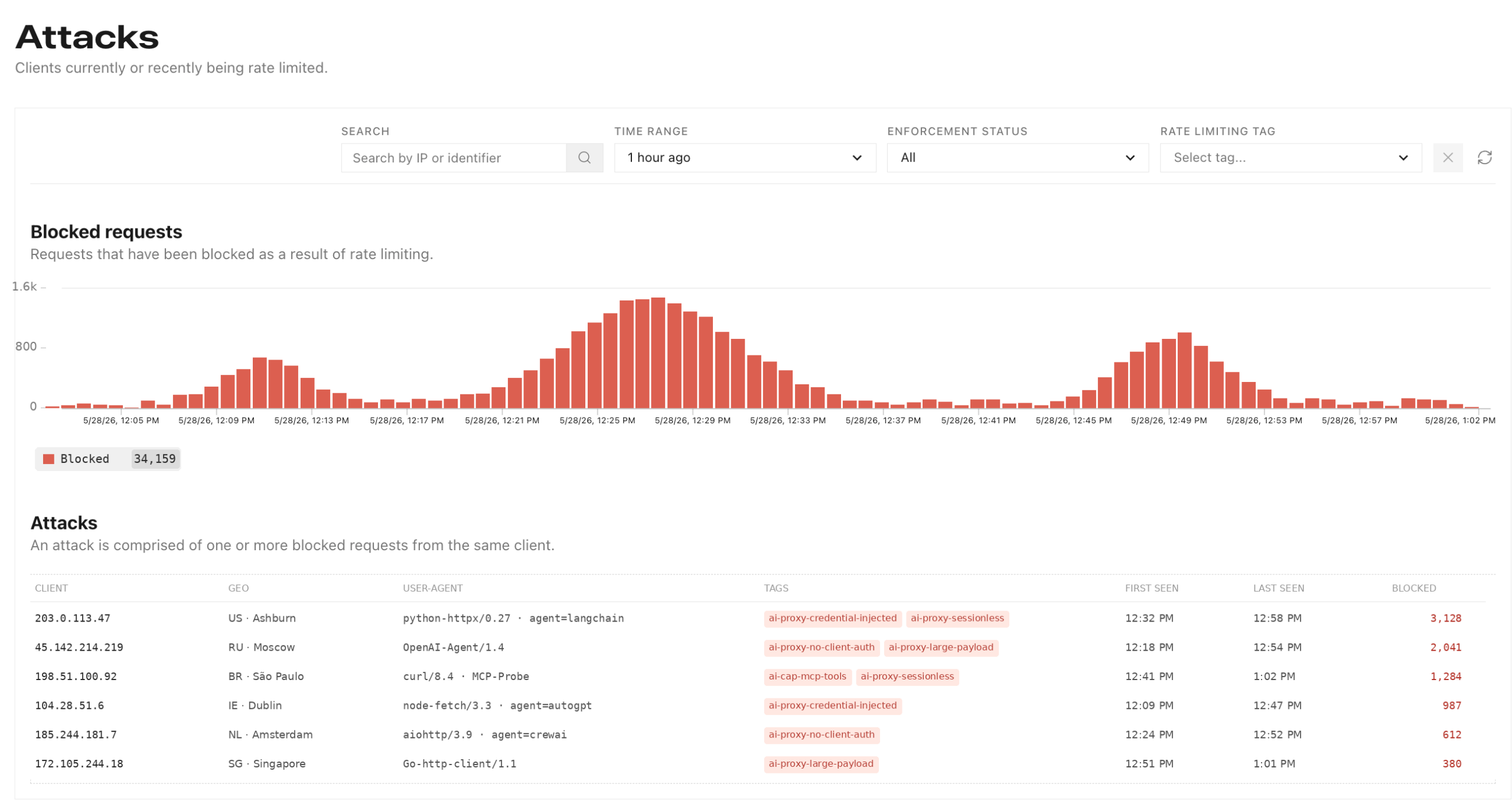
  • Inline enforcement, not monitoring. Impart is the only unified platform running inline in production across LLMs, MCP servers, AI agents, APIs, and web apps. Detection and enforcement share the same request path, so there is no async gap for an attacker to complete an objective inside. The result shows up in the numbers: 95% of customers block in production, where most of the industry stays stuck in monitor mode.
  • One engine across the full attack surface. CDN-tier, ingress-tier, and model-layer tools each see a slice. Impart operates across HTTP, API, AI tokens, tool calls, and function calls, and sees a multi-layer sequence as a single event. A distributed attack becomes one coordinated pattern instead of fragmented findings.
  • Code-based rules instead of regex or rego. AI-native attacks change encoding, split payloads across requests, and chain tool calls in new orders. WebAssembly rules express the detection logic that signature systems cannot, run at machine speed, and stay fully auditable.
  • Novel attacks caught on first appearance. Payloads are normalized before evaluation and behavior is correlated across sessions. Impart does not wait for a signature to exist.
  • Built by runtime engineers. The founding team comes from Fastly, Signal Sciences, and Google. They built and scaled the systems that operate at the layer where security decisions actually have to be made.

The market is full of tools that tell you you're under attack. Impart is for the team ready to stop it in production.
04

Gallery