2026 WINNER · CYBERSECURITY STARS AWARDS
Teleport · Infrastructure Identity Platform
Most Innovative Identity and Access Management Platform



Teleport is the AI Infrastructure Identity Company. The Teleport Infrastructure Identity Platform delivers a unified, cryptographically enforced identity layer for all of modern infrastructure — humans, machines, workloads, and AI agents — through a single control plane.
For years, organizations have managed access through a fragmented mix of identity and secrets management tools, each governing different identity types in isolation. This created credential sprawl, inconsistent policy enforcement, and limited visibility into who — or what — was accessing critical systems. The rise of cloud-native architecture and AI-driven automation has pushed this model past its limits. Identity has become the leading cause of modern security breaches, and most organizations are still trying to address it with tools that were never designed for the environment they now operate in.
Teleport recognized this failure point early and built something different. Instead of layering controls on top of existing fragmented systems, Teleport introduced a new category — Infrastructure Identity — built from the ground up to treat every actor as a first-class identity with strong cryptographic verification, short-lived privileges, and consistent real-time policy enforcement across every environment. This is an ideal architecture for companies whose infrastructure IS their business (such as digital products and services), where the engineering teams require resiliency, scalability, availability, and agility as existential requirements of how they operate.
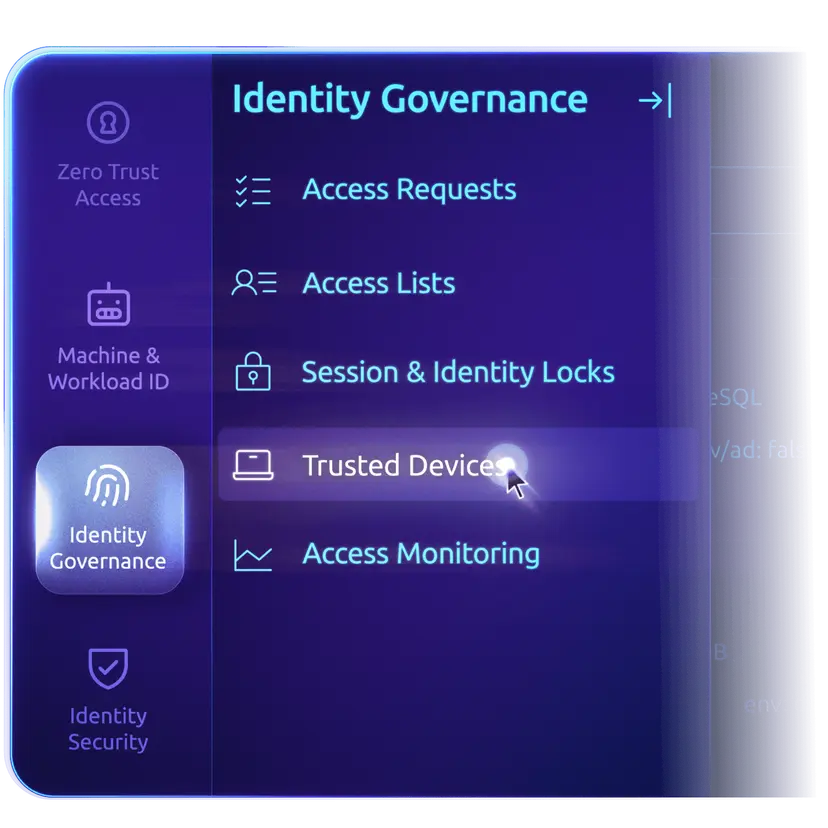
The platform is built around a single principle: a unified identity layer, backed cryptographically, is the control plane for infrastructure. Every capability with respect to access, governance, and identity security, flows from that foundation.
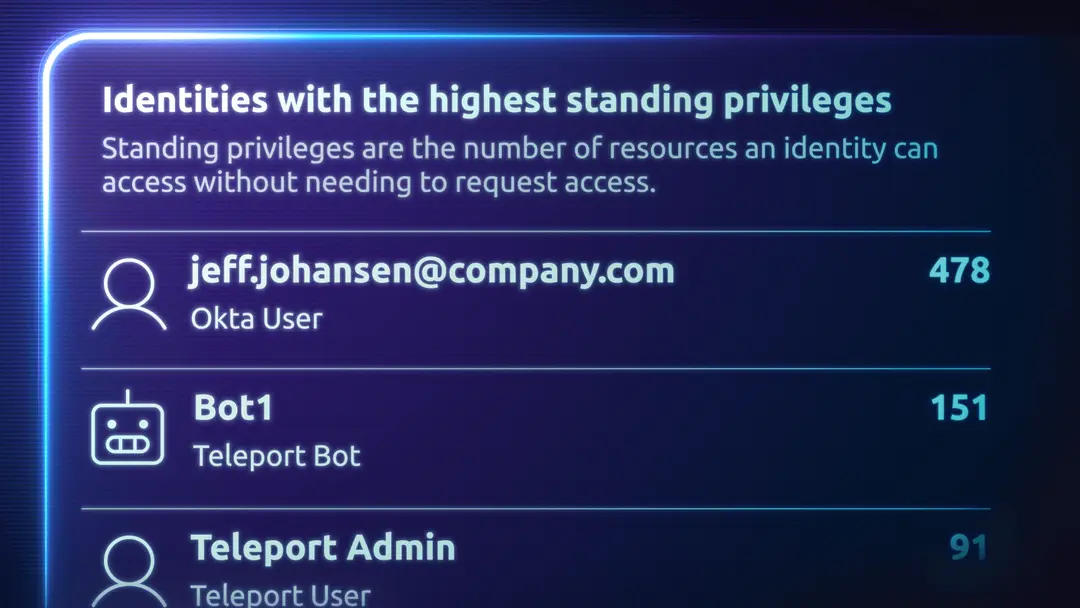
The most significant architectural decision Teleport made was to apply the same identity model to humans, machines, workloads, and AI agents — not separate systems for each. Every actor is issued a short-lived X.509 certificate, cryptographically verified, and governed by centralized real-time policy. There are no exceptions for service accounts, no standing privileges for automation, and no parallel identity silos for AI. One identity system, one control plane, one audit trail.
Teleport's identity model is anchored to a hardware root of trust with certificates — not passwords, API keys, or long-lived tokens. This eliminates the static credentials that are the primary vector for identity-based attacks. Access is scoped to sessions, revocable in real time, and never accumulated over time. When an actor's behavior falls outside policy, privileges are revoked immediately. The identity remains intact; what changes is what that identity is authorized to do.
Identity and policy enforcement is integrated directly with infrastructure protocols — SSH, Kubernetes APIs, databases, and internal applications. Security is enforced as part of the connection itself, not layered on top through proxies or overlays. This means there are no gaps between what policy says and what is actually enforced at runtime. The platform supports:
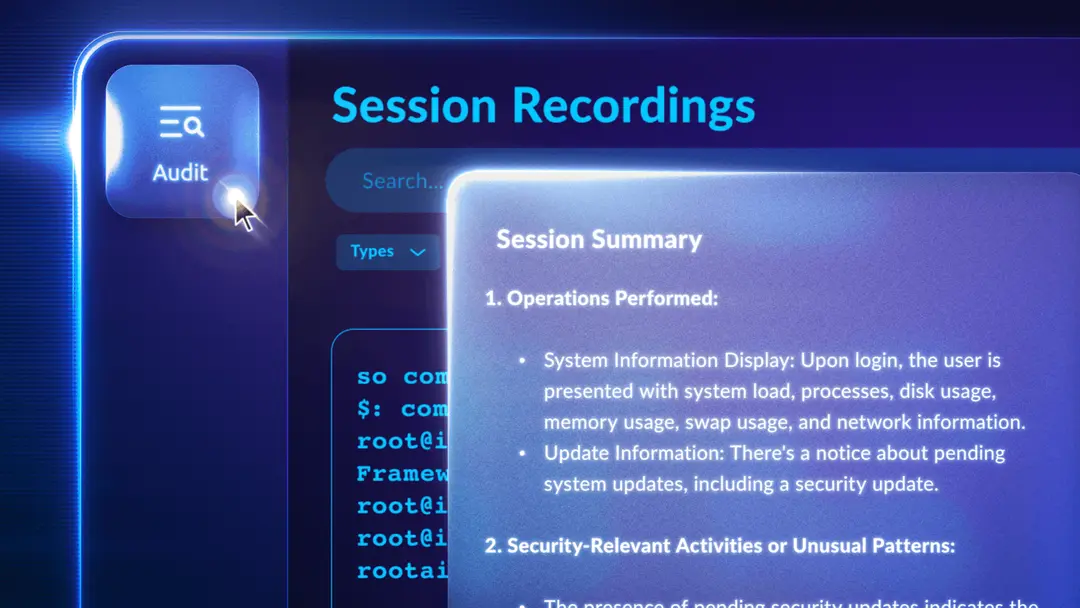
Every access event is recorded with cryptographic verification, creating a continuous, tamper-evident audit trail across all infrastructure. Audit preparation that previously required days of manual reconciliation across disconnected systems is reduced by up to 80%. Forensic investigations that used to span days now take minutes. Compliance becomes a continuous state, not a periodic exercise.
The platform extends its proven identity model to AI through two recent innovations. The Agentic Identity Framework provides the blueprint for deploying AI agents in production infrastructure — covering cryptographic agent identity, MCP-governed tool access, LLM usage controls, and continuous discovery of unmanaged endpoints. Beams takes this further by providing isolated, ephemeral Firecracker VM environments where agents run with built-in identity, policy-defined access, and full auditability — without ever handling credentials directly. Together, they apply the same enforcement model to autonomous systems that enterprises rely on for human and machine access today.
Teleport's Infrastructure Identity solution establishes a purpose-built category for cloud-native, AI-driven environments — solving the problems of modern infrastructure environments that are the backbone of the innovative digital products and services that are proliferating and being accelerated by AI.
Historically, legacy identity architectures were built to manage credentials: issuing them, rotating them, storing them, and hoping they don't leak. Teleport eliminates credentials. Identities anchored to a hardware root of trust, issued just-in-time short-lived privileges, define a security model that eliminates static secrets and lateral movement across the entire environment — removing the attack surface rather than trying to secure it. The distinction matters because the actions are different: you issue, rotate, and expire credentials; you issue privileges that are time-bound, least-privileged, and that expire.
What this delivers in practice:
Nominations for the 2027 Cybersecurity Stars Awards open later this year. Leave your email and we’ll send you one heads-up the day they go live.
We’ll email you the moment 2027 nominations open.