2026 WINNER · CYBERSECURITY STARS AWARDS
ThreatLocker · Zero Trust Platform
Best Ransomware Protection Platform

ThreatLocker is a global cybersecurity leader that stops cyberattacks before they happen. The company's Zero Trust Platform prevents breaches from both known and unknown threats by allowing only explicitly trusted software and activity across endpoints, networks, and cloud systems. Built to deploy quickly and scale across complex environments, the platform reduces operational overhead while keeping business running uninterrupted. Headquartered in Orlando, Florida, with offices in Dublin, Dubai, and Brisbane, ThreatLocker protects over 70,000 organizations worldwide.
The ThreatLocker Zero Trust Platform delivers layered ransomware protection through a proactive, deny-by-default approach built on Zero Trust and least privilege principles. By combining multiple security solutions within a single, centralized platform, ThreatLocker helps organizations reduce complexity, streamline management, and strengthen defenses against modern ransomware attacks.
The platform includes the following ransomware protection solutions:
Allowlisiting: ThreatLocker Allowlisting blocks ransomware by ensuring only approved applications, scripts, and processes can run. Designed to eliminate the complexity traditionally associated with allowlisting, it uses Learning Mode to automatically document normal business activity, build policies around existing applications, and identify application dependencies before enforcement begins. With more than 13,000 recognized applications, streamlined approval workflows, and centralized policy management, ThreatLocker Allowlisting delivers strong ransomware protection while minimizing operational burden and disruption for IT teams and end users.
Ringfencing™: While Allowlisiting determines which programs are permitted to run, ThreatLocker Ringfencing gives security teams control over the behavior of those applications that are allowed. Excessive user privileges are a well-known security vulnerability, but equally dangerous is excessive privileges granted to applications. When applications have access to tools they do not need, like PowerShell, curl, or internet access, attackers can use a compromised program to move laterally within systems. Over 73% of ransomware attacks use PowerShell as part of their attack. Limiting access programs have to each other helps stop attacks dead in their tracks. To ease deployment and avoid disruptions, Ringfencing™ is also implemented using Learning Mode and has built in default policies that can easily be customized for user groups or individual devices.
Privilege Access Management: ThreatLocker Privilege Access Management reduces ransomware risk by removing unnecessary local administrator privileges, one of the most common paths attackers use to gain control of endpoints and move laterally across a network. By restricting administrative access, organizations prevent users and compromised accounts from disabling security protections, running unauthorized applications with elevated privileges, or exploiting tools that could be used to spread an attack. This approach strengthens endpoint security while maintaining productivity for end users.
Through centralized policy controls, IT teams can define exactly which applications, users, or groups are permitted to perform elevated actions, ensuring administrative privileges are limited only to approved tasks. Users can request temporary elevation when needed, while administrators can securely carry out administrative functions without exposing privileged credentials that could be stolen or abused. The result is a more secure environment that significantly reduces the attack surface available to ransomware and other cyberthreats.
Zero Trust Endpoint Firewall: ThreatLocker Zero Trust Endpoint Firewall protects organizations from ransomware and malicious lateral movement by enforcing granular network controls directly at the endpoint level. Unlike traditional firewalls that rely primarily on perimeter defenses, the solution applies Zero Trust principles on individual devices, ensuring every connection request is explicitly authorized based on device, user, IP address, port, and policy. This approach dramatically reduces the attack surface by restricting unnecessary open ports and blocking unauthorized inbound and east-west traffic commonly used by attackers to spread ransomware throughout an environment.
A key differentiator is ThreatLocker's use of dynamic Access Control Lists (ACLs), which automatically open ports only for approved devices, users, or applications and close them when no longer needed. Unauthorized systems cannot access or even detect exposed services, helping organizations eliminate one of the most common vulnerabilities leveraged in ransomware attacks.
Zero Trust Network Access and Zero Trust Cloud Access: ThreatLocker ZTNA and Zero Trust Cloud Access help eliminate one of the most common ransomware entry points: stolen credentials. Designed to make phishing attacks ineffective, these solutions require both hardware verification and an approved IP/network path before users can access company networks or cloud-based resources, including third-party SaaS applications. Even if attackers successfully steal usernames, passwords, or MFA tokens, those credentials are useless without the authorized device and verified connection path.
By enforcing strict identity and device-based access controls, the ThreatLocker Platform prevents attackers from using compromised accounts to gain initial access, move laterally across networks, encrypt files, or exfiltrate sensitive data from cloud environments. This added layer of Zero Trust protection helps organizations defend against modern ransomware tactics while securing both on-premises and cloud resources.
Data Storage Access Control: ThreatLocker Data Storage Access Control gives system administrators the ability to control where users are authorized to access, store, modify and delete data. Restricting access to such locations helps stop ransomware from searching for files and encrypting them.
MDR/EDR: While ThreatLocker is built around proactive, deny-by-default ransomware prevention, the platform also provides Endpoint Detection and Response (EDR) and Managed Detection and Response (MDR) capabilities to identify and contain threats if attackers bypass preventative defenses. Acting as a critical last line of defense, ThreatLocker continuously monitors endpoint behavior and activity for signs of intrusions, ransomware, or malicious insider activity. Known for its speed and rapid response capabilities, the platform enables organizations to quickly detect suspicious behavior, investigate incidents, and limit the spread and impact of attacks before significant damage occurs.
ThreatLocker stands apart through its combination of ease of use, world-class customer support, and proactive Zero Trust cybersecurity defense built around the needs of IT administrators.
From its earliest days, customer support has been central to the identity of ThreatLocker. When signing its first customer, there was a requirement for 24/7 support coverage. At the time, ThreatLocker was still a small company with limited staffing, so CEO Danny Jenkins personally took responsibility for overnight support requests. He installed a light and alarm system in his bedroom that would activate whenever a late-night support ticket was submitted, ensuring customers always received immediate assistance.
Customers were often surprised to discover they were speaking directly with the CEO through the support chat, which sometimes created distractions when the focus needed to remain on solving the issue quickly. To keep the emphasis on customer outcomes, Danny adopted the title "Cyber Hero," a name that has since become part of the company culture and now applies to every member of the support team.
Today, the ThreatLocker Cyber Hero Team provides 24/7/365 support with average response times of approximately one minute. Support is delivered directly from four global offices in Orlando, Dublin, Dubai, and Brisbane.
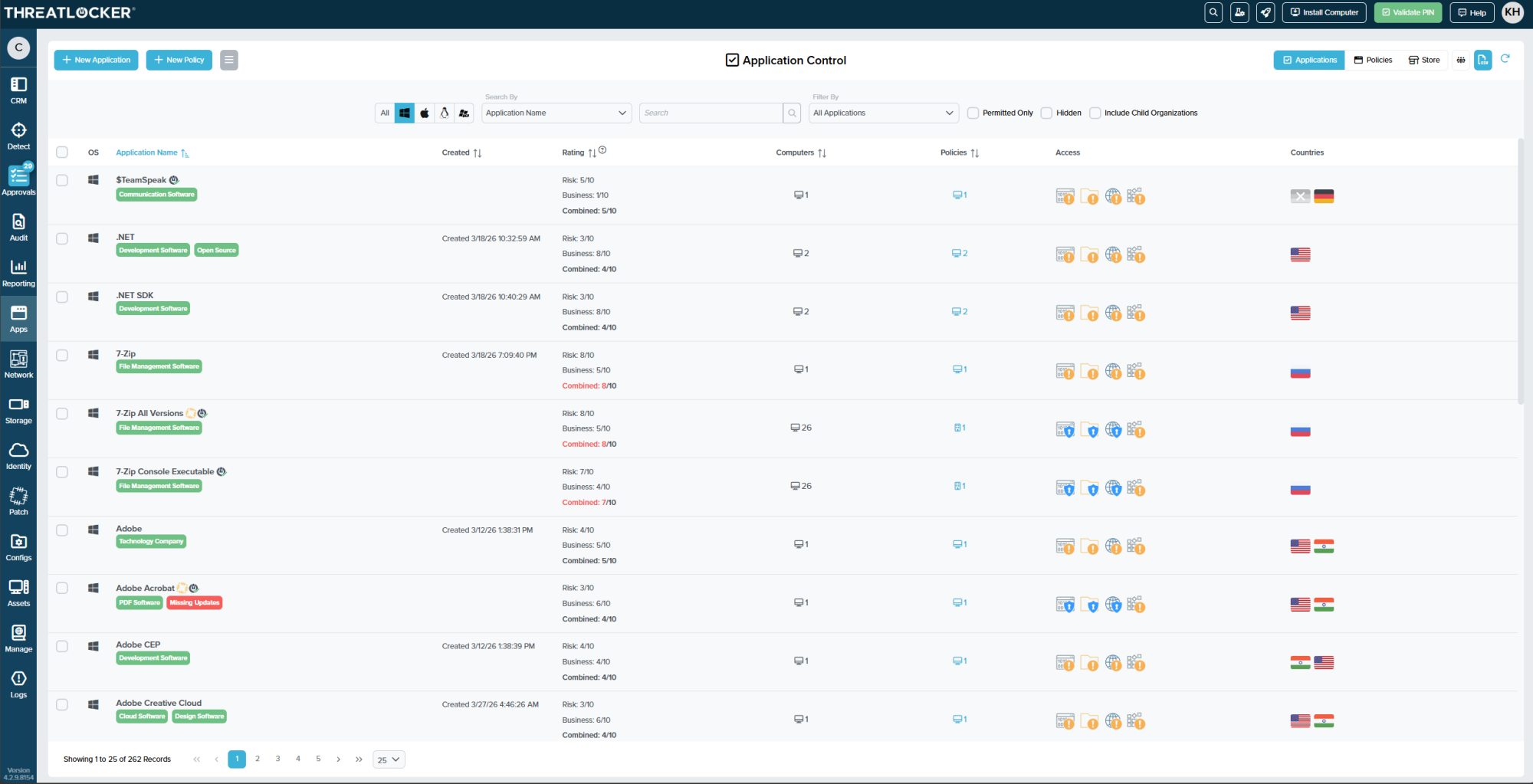
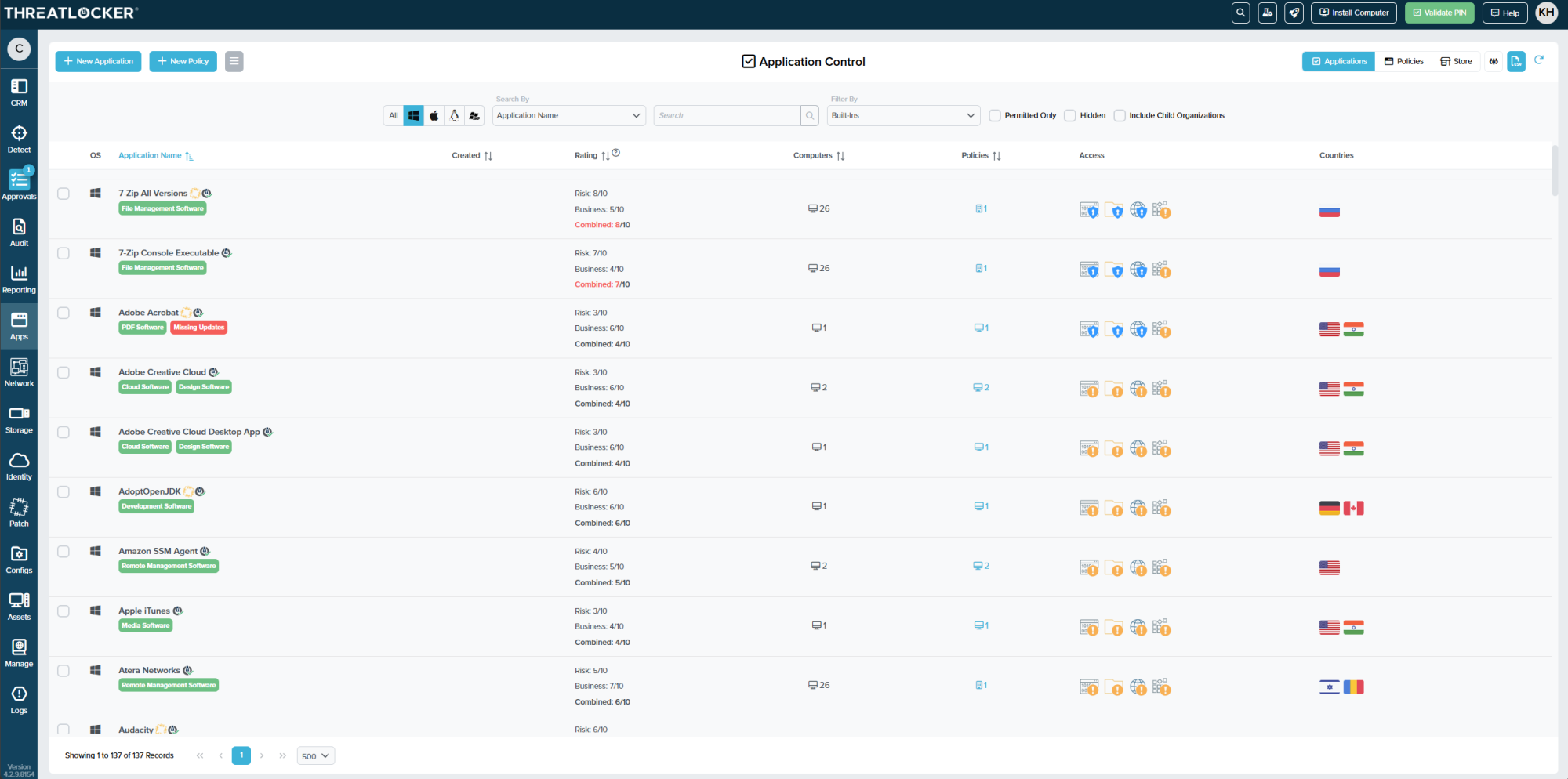
ThreatLocker also differentiates itself through a straightforward user experience. Complexity of managing security policies and controls across multiple tools has been a longstanding frustration among cybersecurity professionals. Designed specifically with IT administrators in mind, the platform provides a centralized dashboard that enables organizations to manage all ThreatLocker solutions from a single interface.
Administrators can quickly create user groups, configure custom policies, establish exceptions, and manage all solutions with just a few clicks. Rather than forcing IT teams to navigate overly complicated menus or rely on time-consuming manual processes, day-to-day security management is simplified while maintaining strong protection. This approach reduces operational overhead, reduces training needs, accelerates deployment, and allows organizations to strengthen security without adding unnecessary complexity for administrators or end users.
Nominations for the 2027 Cybersecurity Stars Awards open later this year. Leave your email and we’ll send you one heads-up the day they go live.
We’ll email you the moment 2027 nominations open.